

Islamic Home Decor: Styling Your Space with Faith and Purpose
Quick Summary
Islamic home decor is the practice of choosing wall art, calligraphy and decorative objects that carry Islamic meaning, such as Qur'anic verses and sacred names, and placing them thoughtfully around your home. Each piece serves as a daily reminder of faith, gratitude and purpose, and can also open respectful conversations with visitors.
- Keep Qur'anic text above eye level and away from floors, clutter, bathrooms and kitchens.
- Choose verses you understand, and read the translation before hanging any piece.
- For small rooms, a single medium-sized piece often has more impact than several small ones.
- Renters can use removable hooks or adhesive strips, after checking the weight rating.
- The Pray On The Land Prayer Mat is lightweight, waterproof, opens to 114 × 60cm and folds to 180g.
Table of Contents
- Why Islamic Home Decor Matters for Your Living Space
- Islamic Wall Art: Calligraphy, Qur'anic Verses and Sacred Names
- Islamic Calligraphy Wall Art: Choosing Pieces with Meaning
- Islamic Ornaments and Decorative Objects for Every Room
- Respectful Placement and Room-by-Room Styling
- Islamic Gifts for the Home: Ideas for Weddings, Eid and Ramadan
- Adding a Prayer Space Your Home Will Use Every Day
- Frequently Asked Questions
Why Islamic Home Decor Matters for Your Living Space
Last Updated: November 16, 2026
Your home is where your faith is lived out every day, from the first prayer of the morning to quiet evenings with family. Islamic home decor, the careful choice of wall art, calligraphy and objects that reflect your values, turns an ordinary room into a space that reminds you of what matters. A single well-chosen piece can change the feel of a room entirely.
Islamic home decor is the practice of selecting artwork and decorative objects that carry Islamic meaning, such as Qur'anic verses, sacred names and calligraphy, and placing them thoughtfully in your home. It is about more than decoration. Each piece becomes a quiet, daily reminder of faith, gratitude and purpose.
Many Muslim households in the United Kingdom now treat their home as a place for worship, hospitality and reflection. A dedicated corner, a calm reading nook or a welcoming entrance can all carry that intention. Good décor supports those habits rather than competing with them.
Dawa, the invitation to Islam through word and example, also has a place in the home. A visitor who sees a thoughtful piece of calligraphy may ask about its meaning, opening a natural and respectful conversation. Your home can quietly share your faith without a word being spoken.
Islamic Wall Art: Calligraphy, Qur'anic Verses and Sacred Names
Islamic wall art usually features Arabic calligraphy, Qur'anic verses, Surahs or the names of Allah. These pieces are among the most popular choices for living rooms, hallways and bedrooms because they combine beauty with meaning.
Choose verses you understand and value, and read the translation before you hang a piece. Placing Qur'anic text at a respectful height and in a clean, dignified setting is a sign of care. Avoid positioning it near floors, bathrooms or places where it may be treated carelessly.
Canvas, Framed Prints and Metal Wall Art
Each format suits a different room and behaves differently over time.
For a small space, a single medium-sized piece often has more impact than several small ones. Renters can use removable hooks or adhesive strips to hang lightweight canvas and framed prints without damaging walls. Check the weight rating on the hook and the weight of the piece before you commit, and avoid hanging anything heavy above a bed or a seat where it could fall.
A well-chosen piece can also open a quiet conversation about faith with visitors, which is part of dawa in the home. Pairing wall art with the Pray On The Land Prayer Mat in a prayer corner gives that corner a coherent focal point, and the mat's lightweight, waterproof design and 180g folded weight make it easy to keep the space tidy between prayers.
Islamic Calligraphy Wall Art: Choosing Pieces with Meaning
Calligraphy is where Islamic art has developed most richly. Thuluth, Naskh and Diwani scripts each have a distinct character, so consider which style suits your room. Bold, flowing scripts suit larger walls, while finer lettering works well in smaller frames.
Islamic Ornaments and Decorative Objects for Every Room
Beyond wall art, Islamic ornaments add warmth to a home. Wooden plaques, decorative boxes, Tasbeeh holders and handcrafted objects can sit on a shelf, a side table or a windowsill. They work well as conversation pieces and as gifts.
Match objects to the room. A handcrafted box suits a bedroom dresser. A small plaque with a short sacred phrase suits a hallway. A wall clock with Islamic lettering can anchor a kitchen or family room.
Respectful Placement and Room-by-Room Styling
Most product pages stop at the item; the part they rarely explain is how to place Islamic décor so it is both respectful and practical. A few habits cover most homes. Keep Qur'anic text above eye level and away from clutter, and never place it on the floor or where it might be stepped over. Many households also keep sacred text away from bathrooms and kitchens. These habits show respect and suit small homes as well as large ones.
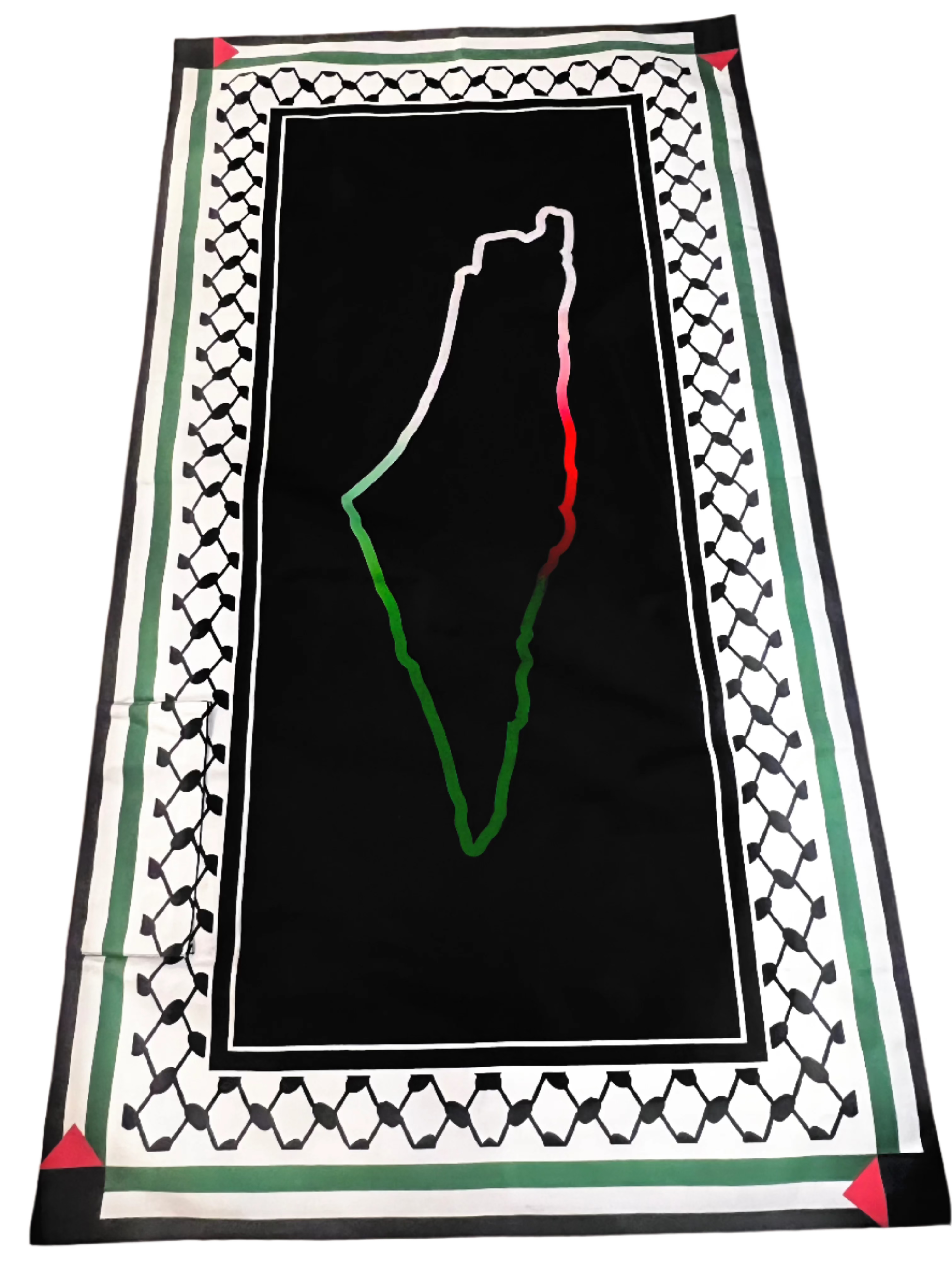
In a living room, place one central piece where guests will see it when they sit down, and keep the surrounding wall calm so the calligraphy reads clearly. In a hallway, a smaller frame at eye level welcomes visitors without crowding the space. In a bedroom, choose calm colours and soft lighting around any verse you read at night. In a prayer corner, keep the surface clear and let one piece of art and the Pray On The Land Prayer Mat do the work; its Palestine map design and keffiyeh-inspired border give the space a meaningful focal point, and its clip-on hook keeps it secure when folded.
For small or rented homes, start with one feature wall or one shelf and build slowly. Removable adhesive strips and lightweight frames are the renter's friend, but check the weight limit and the wall finish first. A single well-lit piece usually reads better than a crowded gallery wall in a compact room.
Dawa is often a matter of atmosphere rather than words. A tidy, thoughtfully arranged corner invites questions from guests and gives you a natural opening to explain what the calligraphy says and why the prayer space matters. That quiet example is often more effective than any display.
The article sets out how to place Islamic décor across different rooms; this table condenses the placement guidance.
| Room | Placement | Key guidance |
|---|---|---|
| Living room | One central piece | Visible when guests sit; keep wall calm |
| Hallway | Smaller frame | Eye level; welcomes visitors without crowding |
| Bedroom | Verse read at night | Calm colours and soft lighting |
| Prayer corner | One art piece plus prayer mat | Keep surface clear; mat as focal point |
| Qur'anic text (general) | Above eye level | Away from clutter, floors, bathrooms and kitchens |
| Small or rented home | One feature wall or shelf | Check weight limit and wall finish first |
Islamic Gifts for the Home: Ideas for Weddings, Eid and Ramadan
Home décor makes a thoughtful gift for weddings, Eid and Ramadan. If you want guidance on finding trustworthy Islamic gifts, read how to find reliable Islamic gifts you can trust. A framed verse suits a newly married couple's first home, while a decorative box or Tasbeeh set works well for Eid. Consider the recipient's taste and the room they will place it in.
For a wedding gift, a large framed calligraphy piece often feels most special. For a fuller guide, see seven steps to choosing Islamic wedding gifts. For Ramadan, a small ornament or a wall clock makes a practical present.
Adding a Prayer Space Your Home Will Use Every Day
A dedicated prayer space does not need a whole room. A quiet corner with a clear, clean area, a mat and one or two pieces of calm wall art is enough. Good lighting and a tidy surface help make the space feel like a place of worship rather than storage.
The Pray On The Land Prayer Mat is a practical choice for this. It is lightweight and waterproof, measures 114 × 60cm when opened and folds down to 180g, so it can stay in a corner or travel with you. Its Palestine map design and keffiyeh-inspired border give the prayer space a meaningful focal point, and its clip-on hook keeps it secure when folded.
If you are still deciding, our guide on how to choose a prayer mat explains what to look for in materials and size. For a mat that will see regular use, read our notes on thick prayer mats for daily use.
Pray On The Land is priced at £34.99. Its design reflects a connection to Palestine and a reminder to honour its journalists. Pairing a mat like this with a piece of calligraphy creates a space that supports your worship every day.
Creating a home that reflects your faith takes time, and every piece you choose adds to it. At Muslimfizz, our range is designed to help you build a space that feels calm, respectful and personal. Explore our collection and find the pieces that suit your home, and let your living space quietly reflect what matters most to you.
Frequently Asked Questions
What are popular types of Islamic home décor?
Popular choices include Arabic calligraphy prints, Qur'anic verse wall art, canvas and framed prints, metal wall art, wooden plaques, wall clocks, and décorative ornaments. Calligraphy and framed prints are the most common starting point because they suit most rooms and budgets. Metal and 3D pieces add texture for a more contemporary look. Choose one or two focal pieces first, then add smaller ornaments so the room does not feel crowded. Prices vary by size and material, so compare dimensions and finishes before buying.
How can I décorate my home with Islamic art?
Start with a single focal wall, such as the one behind a sofa or above a bed, and hang one larger piece there. Keep the colour palette consistent with the rest of the room, picking up tones from cushions or rugs. Use smaller ornaments on shelves or side tables to balance the space. In a rented flat, use picture hooks or removable strips rather than drilling. Grouping three frames of different sizes creates a gallery effect without needing much wall.
Where should Islamic wall art be placed?
Place Qur'anic text and sacred names at eye level in a living area, hallway or bedroom, where they can be seen calmly. Many households avoid hanging sacred text in bathrooms, near the floor or where it may be walked past carelessly. Entrance halls and reception rooms are popular for welcoming pieces. Respectful placement is a matter of personal and family practice, so choose the spot that feels right for your household.
How can I choose Islamic décor as a gift?
Think about the recipient's taste and the occasion. A framed calligraphy print suits a housewarming or wedding, while a wall clock or décorative ornament works well for Eid or Ramadan. If you know their colour scheme, pick a neutral or matching palette.
